How regular agarbatti is usually made
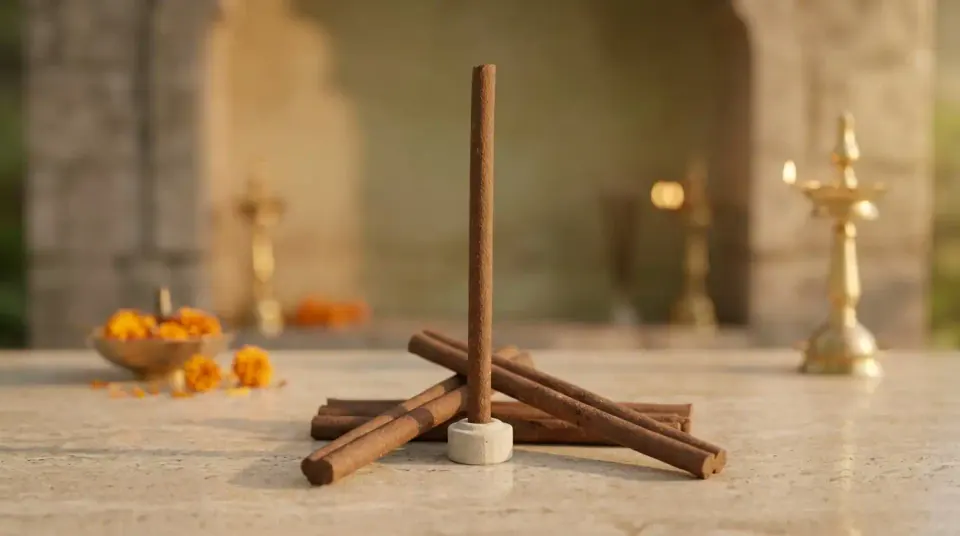
Many mass-market agarbattis start as a thin bamboo stick coated in a paste of charcoal powder, wood powder and a binder. Once dry, the plain sticks are dipped in perfume. The charcoal keeps the stick burning; the perfume gives the smell. That is why some sticks smell strong in the pack but leave a harsh, smoky note in the room.
How cow dung incense is made
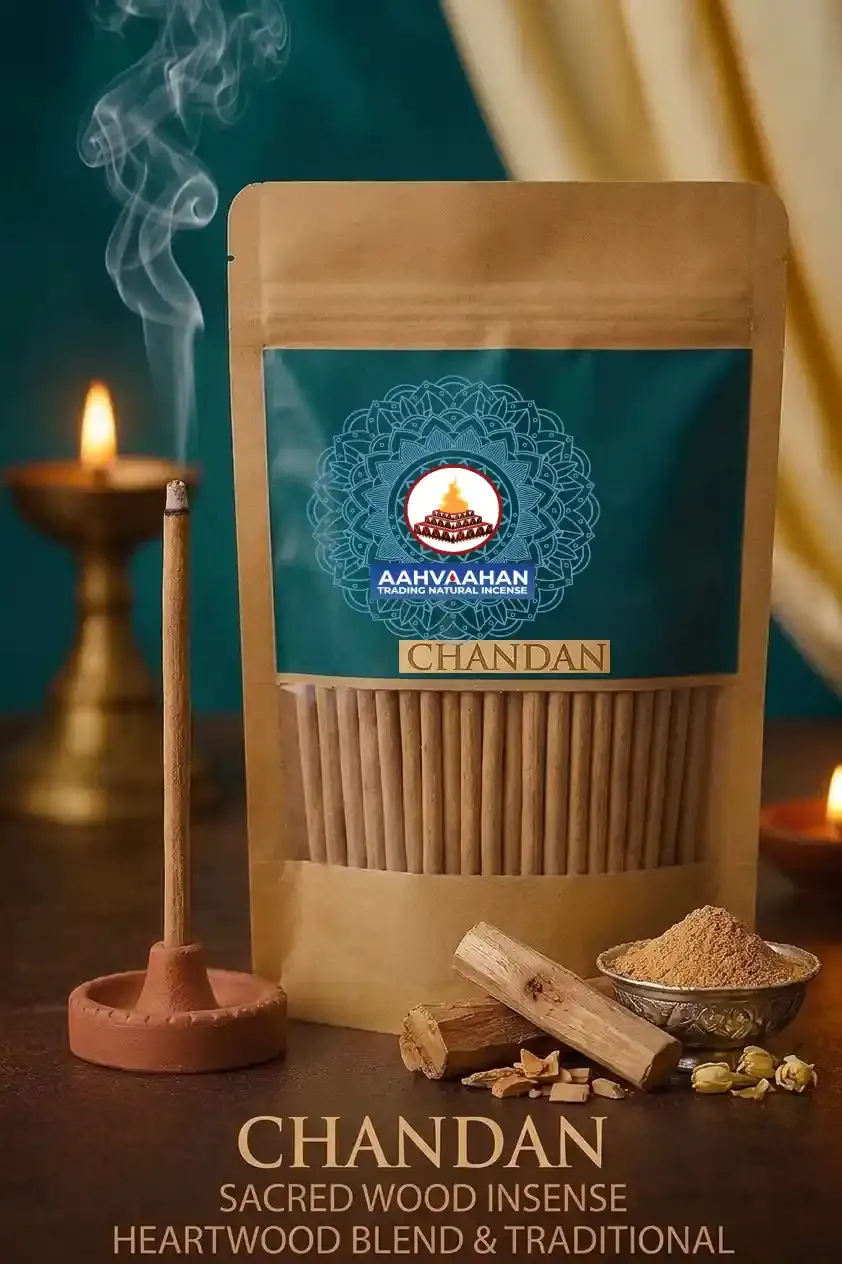
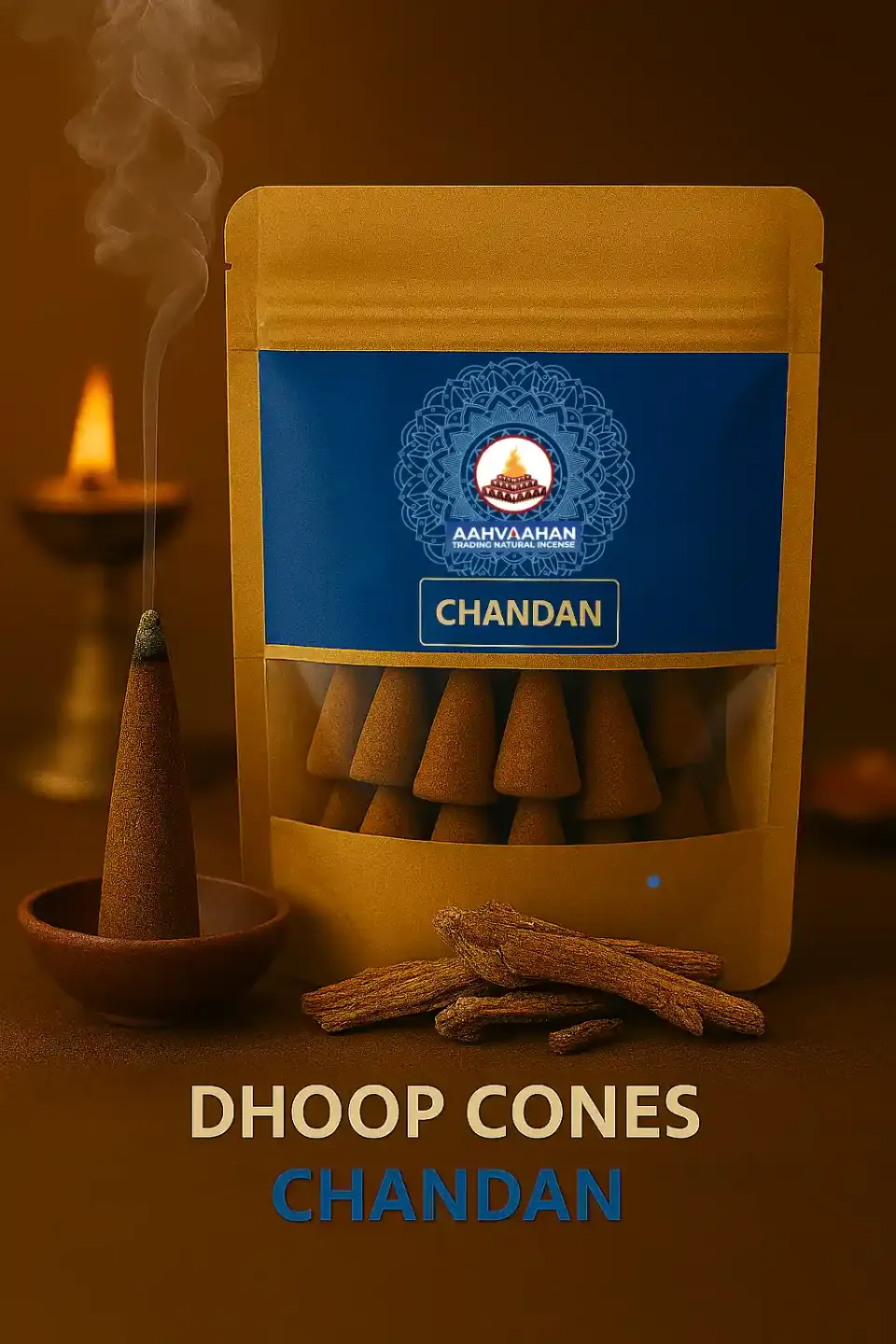
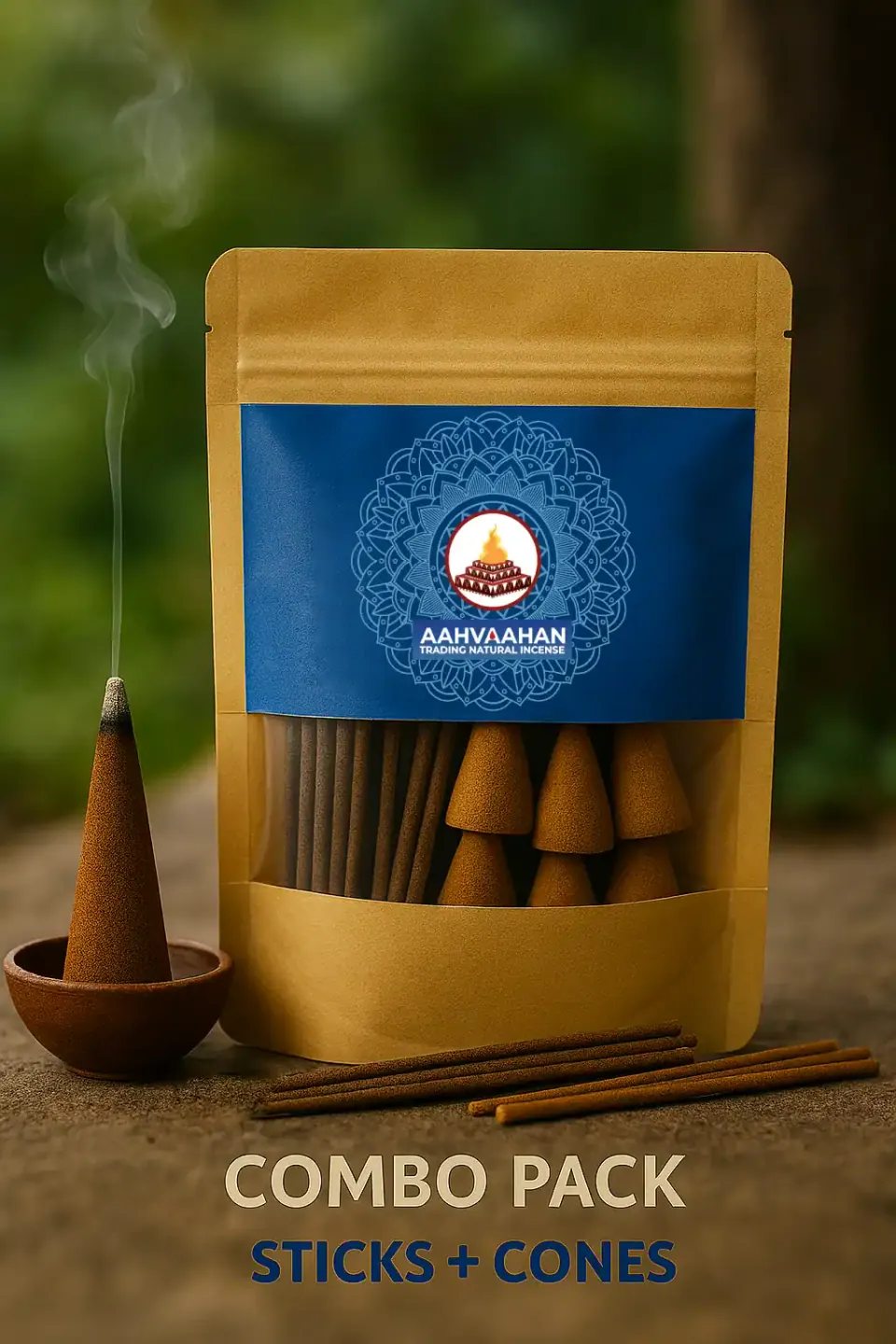
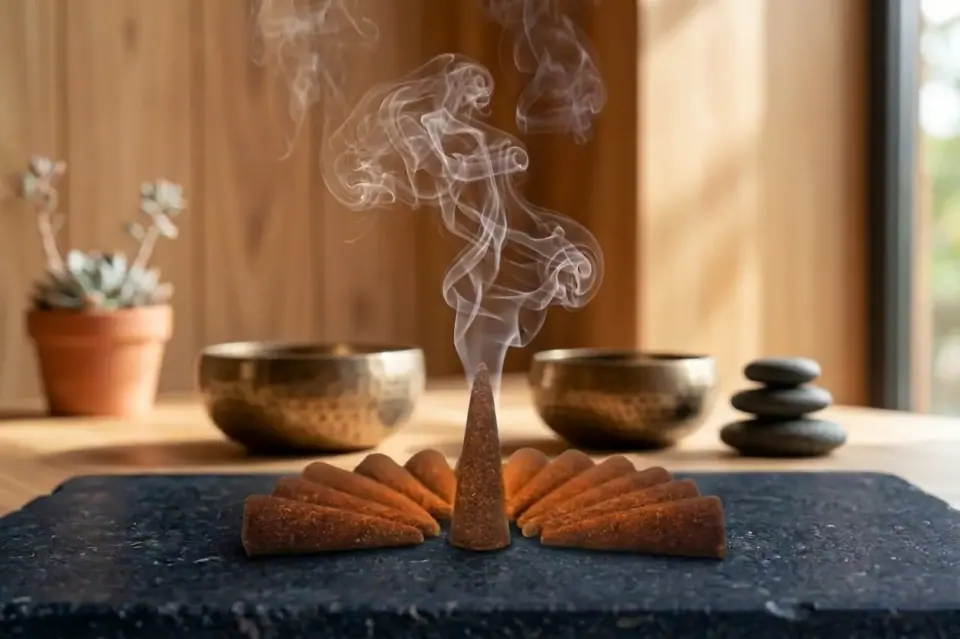
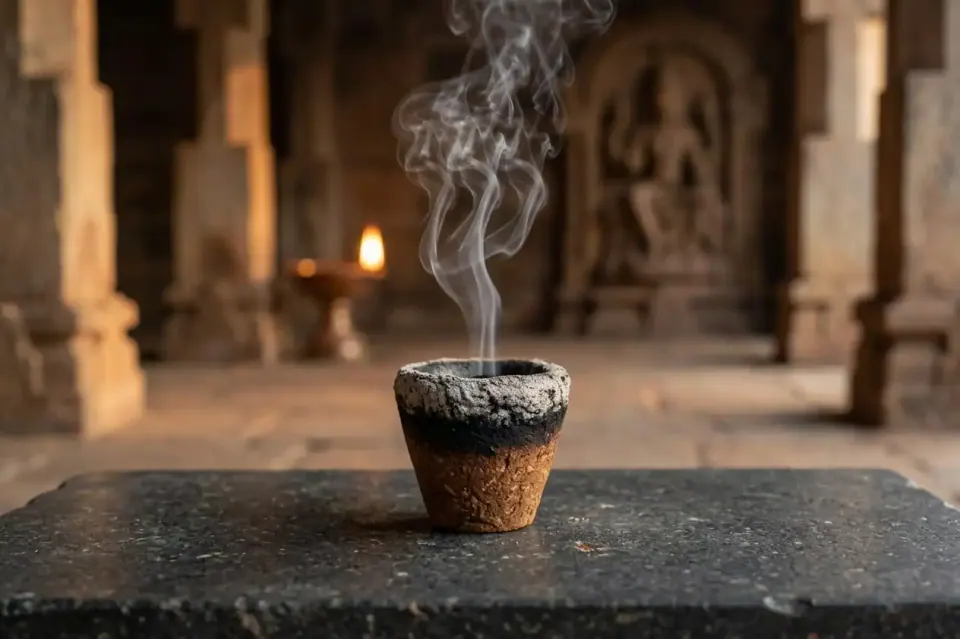
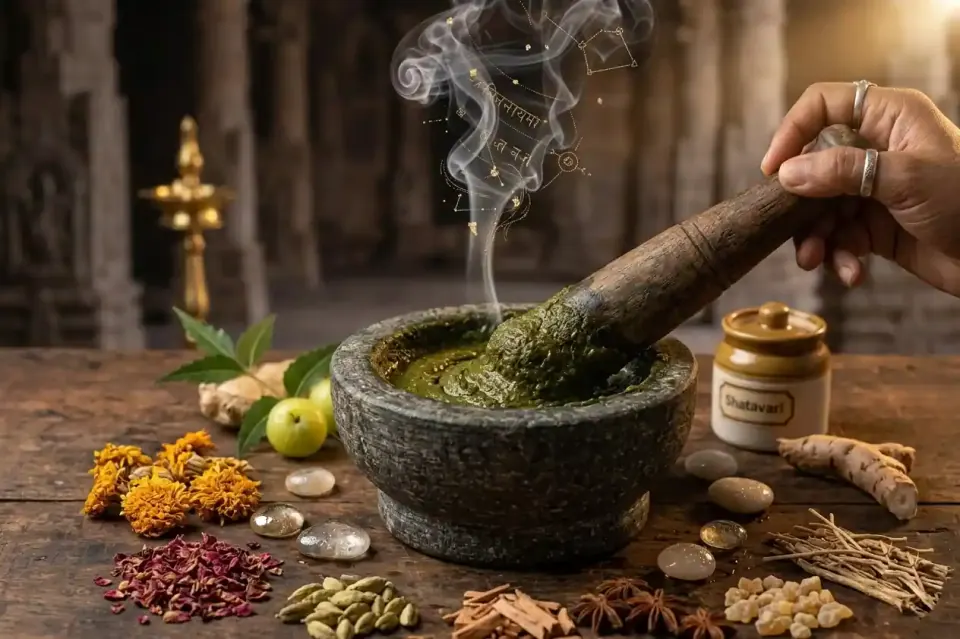
At AAHVAAHAN we start with purified cow dung, blended by hand with herbal powders, flowers, roots and natural resins. There is no charcoal filler and no chemical accelerant. The blend is rolled into sticks or pressed into cones and cups, then dried slowly in the sun. Cow dung has been used in Indian ritual for thousands of years and is held sacred in Vedic tradition.
What you notice when you burn it
- Smoke: lighter and softer for sticks, a steady rising column for cones.
- Fragrance: comes from the herbs and resins themselves, so it feels more natural and less sharp.
- Burn: a slower, gentler burn. Our sticks last about 30 to 40 minutes each.
- After burning: mostly fine ash that can go into plant pots or garden soil.
Is any incense smoke-free?
No. All incense, dhoop and samrani is made to give smoke, and any smoke is best enjoyed in moderation. Burn one stick or cone at a time in a room with some fresh air, and avoid burning incense near anyone who is sensitive to smoke.
Good for the earth too
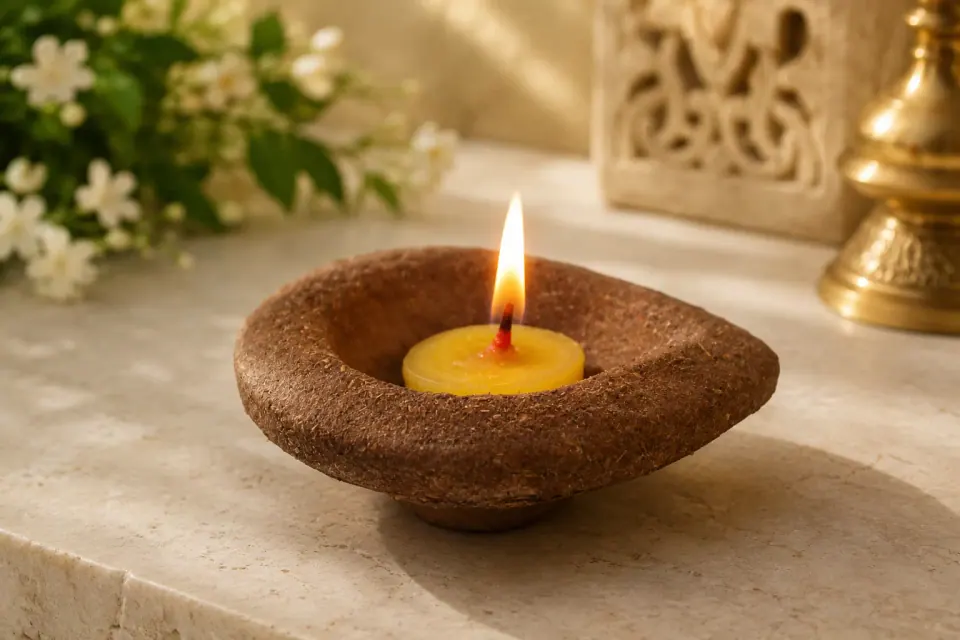
Cow dung is a natural, renewable material, and our cow dung diyas are fully biodegradable. After Diwali, they can go back into the soil instead of a bin.